Ravi faced something off track. A snag showed up where he least expected it.
A tiny tech company kept Ravi busy, making phone apps for shops nearby. Out of nowhere, someone who owned a diner requested an order system online. With quiet focus, he mapped each detail alongside his group – what it would do, how long it’d take, how it looked. Weeks slipped by while they shaped what felt like a flawless version.
Then came the moment they presented it to the client – only for things to shift in a way no one saw coming.
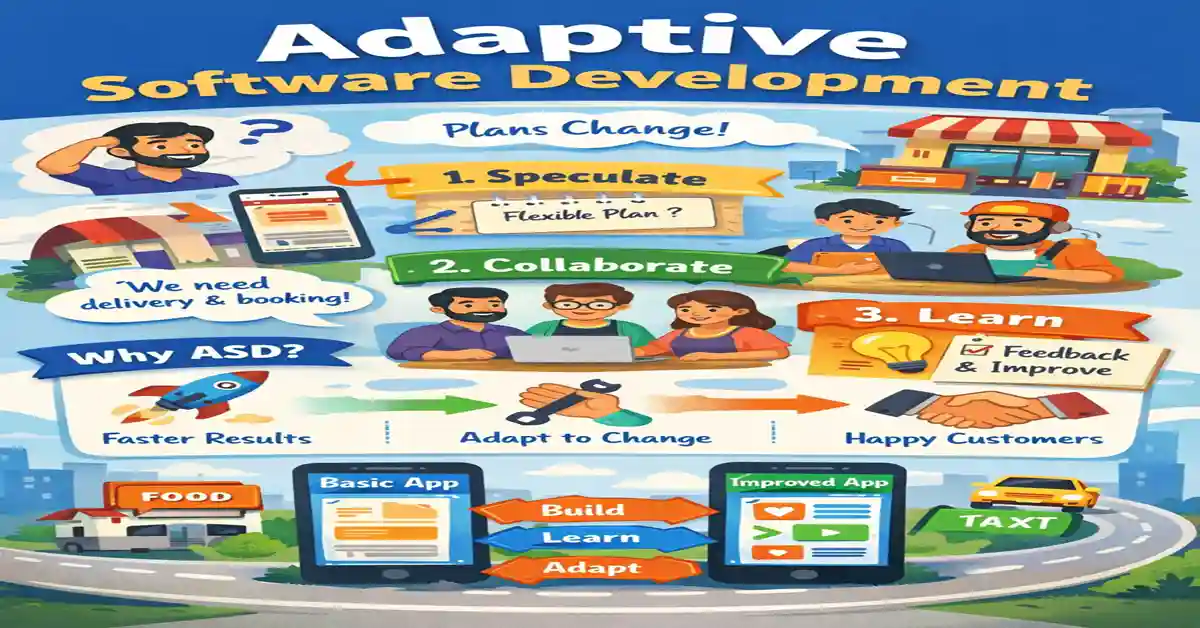
The restaurant owner said, “This looks great… but I actually need table booking and delivery tracking first.”
Finding the truth took time – Ravi saw it then – the strategy made sense on paper yet life moved differently now.
Here’s when Adaptive Software Development steps into view.
Adaptive software development basics?
Software built through Adaptive Software Development shifts as work unfolds. Starting without a rigid roadmap, it grows by watching what happens, working together closely, then adjusting fast when things change. Progress comes not from sticking to steps but from staying alert, looping feedback into each phase, responding while moving forward.
In simple terms:
The Main Thought About ASD
Most old-school coding sticks to a fixed roadmap. Yet ASD acknowledges something real right away
Nothing stays the same forever. Things shift without asking.
Fresh demands pop up, industries wobble, bright notions spark. Rather than push back, ASD leans into motion.
The Three Stages of Flexible Program Creation
A loop runs through three clear parts when ASD operates. First comes observation, followed by interpretation right after. Then actions happen based on what was understood just before
1. Think Ahead Stay Open
Guessing takes over when plans get too stiff – teams aim somewhere, then assume how it might unfold.
Hard lessons taught Ravi a new approach. These days, rather than sealing it all off, he sketches out what matters
Key features
Rough timelines
Possible risks
Yet change doesn’t shut him down.
2. Collaborate Work Together Constantly
Working together matters most in ASD. Communication flows naturally within the group. Team efforts shape daily actions here. Shared understanding grows through constant talk. People connect by speaking clearly. Group strength builds from open exchanges. Interaction guides how tasks move forward.
Close collaboration happens among developers, designers, clients. Input flows throughout – never only when finished.
In Ravi’s case:
Every week he began showing how it worked
Clients gave input early
Faster adjustments came without delay
3. Learn Through Feedback
After each cycle, the team reflects:
What worked?
What didn’t?
Change begins by asking what needs shifting.
A single misstep can spark progress – shaping how things are built while quietly refining the way tasks unfold.
Adaptive software development matters because it responds to change
Ravi’s story picks up again here.
Later on, ASD shifted direction entirely. Not going for full buildouts anymore, he put out a stripped-down version early. Once the client tried it, comments came back – each round shaping what came next. Slowly, the app grew better through real use.
The result?
✔ Faster delivery
✔ Better customer satisfaction
✔ Fewer costly mistakes
Key Benefits of ASD
1. Flexibility
Facing a shift? Adjust midstep when users ask differently. Midcourse tweaks fit their next move. Way they respond shapes your path forward.
2. Faster Results
Faster delivery means software works right away, not after long waits.
3. Better Quality
Testing often helps catch mistakes early. Feedback sharpens results over time.
4. Customer Involvement
Working alongside clients happens all through, not only at the close.
Autism Spectrum Disorder Compared With Conventional Growth Patterns
Traditional vs Adaptive Software Development Approaches
Picture services that bring meals to your door. Or imagine tapping a screen to get a lift across town.
It wasn’t flawless at first. Little by little, things began to shift
Live tracking
Payment options
Ratings
This steady progress? That’s what drives ASD forward.
When To Use ASD?
ASD is best when:
Requirements are unclear or changing
You need fast development
Customer feedback is important
Innovation is involved
Final Thoughts
Floating through change, Adaptive Software Development shapes how teams think, not only what they do.
What Ravi shows isn’t flashy – just quiet truth. His path holds a lesson, plain if you look close. Not loud, yet it sticks. A moment becomes meaning when lived right. Small choices matter more than grand plans ever do
A shift happens quicker now than anyone expects. Flexibility matters most when nothing stays fixed for long.
Built a program lately? Here’s something to hold close.
👉 Start small
👉 Listen to feedback
👉 Keep improving
That’s the true power of Adaptive Software Development.